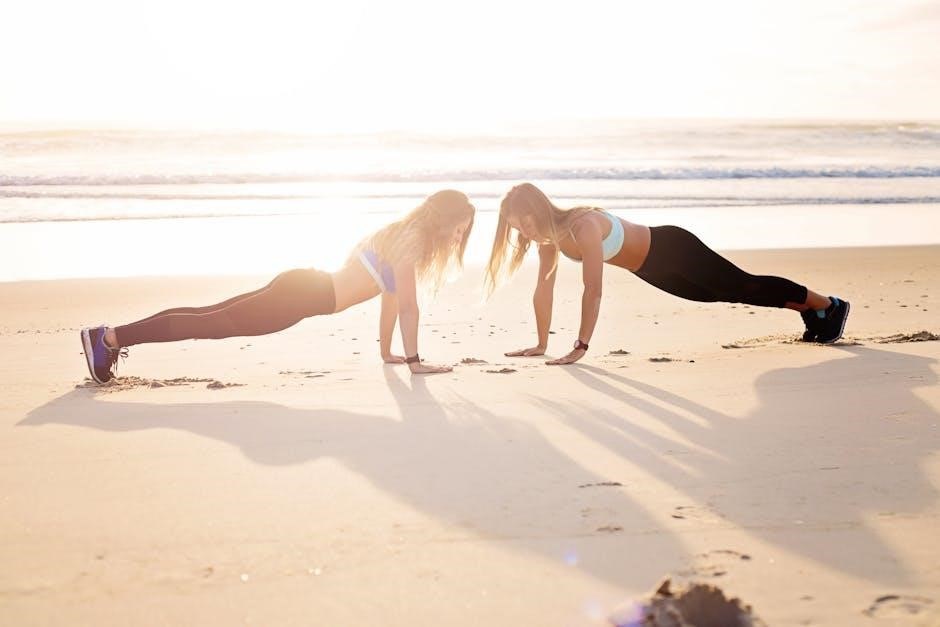
Push Pull Legs Workout Plan: A Comprehensive Guide
This guide details a 6-day Push-Pull-Legs (PPL) split, offering a free downloadable PDF for serious gains. It’s a flexible routine, suitable for various fitness goals!
What is a Push Pull Legs (PPL) Workout?
The Push Pull Legs (PPL) workout routine is a strength training approach that divides exercises based on movement patterns. “Push” days focus on exercises that involve pushing weight away from the body – think chest, shoulders, and triceps. “Pull” days target muscles used in pulling motions, like back and biceps.
“Legs” days, naturally, concentrate on lower body exercises. This split allows for focused muscle group training with adequate recovery time between sessions. A typical PPL schedule involves six training days followed by a rest day, or repeating the cycle.
The downloadable PDF provides a structured plan, detailing specific exercises for each day, optimizing muscle growth and strength gains. It’s a highly effective method for both beginners and experienced lifters.
Benefits of a PPL Split
A Push Pull Legs split offers numerous advantages for fitness enthusiasts. Firstly, it provides flexibility, accommodating various training focuses – strength, hypertrophy, or general fitness. This adaptability makes the downloadable PDF plan suitable for diverse goals. Secondly, it promotes “functional efficiency,” maximizing workout effectiveness.
The PPL method allows for higher training frequency per muscle group compared to full-body routines, stimulating greater muscle protein synthesis.
Furthermore, it enables focused effort on specific muscle groups, leading to targeted development. The split also facilitates better recovery, as muscle groups aren’t overworked consecutively. Ultimately, the PPL split, as outlined in the PDF, is a results-driven approach to building strength and muscle.
PPL Split vs. Other Workout Routines
Compared to traditional full-body workouts, the PPL split, detailed in the downloadable PDF, allows for greater volume per muscle group. This focused approach contrasts with full-body routines that spread effort thinly. Unlike upper/lower splits, PPL dedicates entire days to pushing, pulling, and leg movements, enhancing muscle fatigue and stimulus.
Bro splits, focusing on one muscle group per day, can lack frequency. The PPL split offers a balance, hitting each muscle group twice a week.
This frequency is crucial for optimal growth. The PDF plan’s structure optimizes recovery and prevents overtraining, unlike routines with insufficient rest. Ultimately, PPL provides a structured, efficient path to fitness gains.
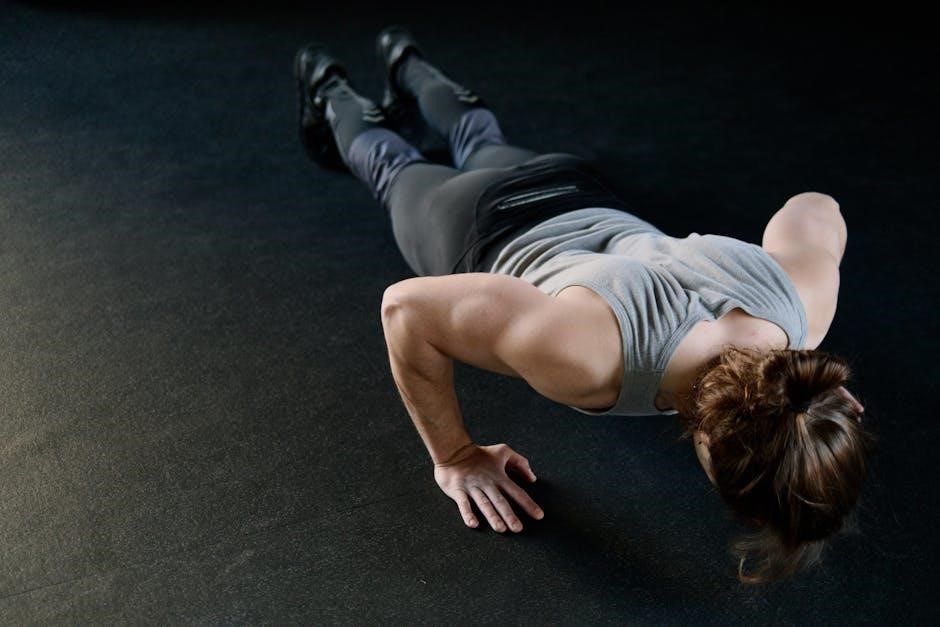
The 6-Day PPL Workout Schedule
The typical PPL schedule, outlined in the PDF, involves Push on Day 1, Pull on Day 2, and Legs on Day 3, followed by rest or active recovery.
Day 1: Push Workout
Day 1 focuses on pushing movements, targeting chest, shoulders, and triceps. The downloadable PDF details a variety of exercises for each muscle group. Expect to incorporate exercises like squats, leg press, and deadlifts to build foundational strength.
Chest exercises are paramount, building upper body power. Shoulder exercises enhance stability and definition. Don’t neglect triceps exercises, crucial for arm development. Remember to utilize Rate of Perceived Exertion (RPE) to gauge intensity. This workout is designed to be intense, pushing your limits while maintaining proper form. Prioritize controlled movements and focus on muscle engagement throughout each set. This day sets the tone for the week, establishing a strong foundation for subsequent workouts.
Chest Exercises
Chest day is vital for upper body strength and aesthetics. The provided PDF outlines several effective exercises. Begin with compound movements like bench press – flat, incline, and decline – to maximize muscle fiber recruitment. Follow these with isolation exercises such as dumbbell flyes and cable crossovers to refine chest definition.
Focus on controlled movements and a full range of motion. Utilize RPE to challenge yourself appropriately. Remember proper form is crucial to prevent injury and optimize results. Vary your rep ranges and sets to stimulate different muscle fibers. Prioritize progressive overload, gradually increasing weight or resistance over time. This ensures continuous muscle growth and strength gains. Don’t underestimate the power of a well-structured chest workout!
Shoulder Exercises
Strong, well-defined shoulders contribute significantly to a balanced physique. The PPL PDF recommends a variety of shoulder exercises targeting all three heads – anterior, medial, and posterior. Incorporate overhead presses (barbell or dumbbell) as a foundational movement for overall shoulder strength. Lateral raises and front raises isolate the medial and anterior deltoids, respectively.
Rear delt flyes are essential for balanced shoulder development. Utilize different angles and equipment (cables, dumbbells) to maximize muscle activation. Pay close attention to form, avoiding momentum and focusing on controlled movements. Implement RPE to gauge intensity and ensure progressive overload. Remember, shoulder health is paramount; prioritize proper technique and warm-up thoroughly before each session.
Triceps Exercises
Developing the triceps is crucial for maximizing upper arm size and pushing strength. The PPL workout PDF emphasizes exercises that effectively target this muscle group. Close-grip bench presses are a compound movement that heavily engages the triceps alongside the chest; Skullcrushers (lying triceps extensions) provide excellent isolation, but require careful form to avoid elbow strain.
Cable pushdowns and overhead dumbbell extensions offer versatile options. Vary grip attachments and angles to hit different portions of the triceps. Focus on a full range of motion and controlled contractions. Utilize RPE to monitor effort and progressively increase weight or reps. Prioritize proper technique to prevent injury and maximize muscle activation during each set.
Day 2: Pull Workout
The Pull workout focuses on developing the back and biceps, creating a balanced physique. As outlined in the PPL workout PDF, this day is dedicated to movements that involve pulling weight towards your body. Back exercises are paramount, starting with pull-ups or lat pulldowns to build width. Barbell rows and seated cable rows target back thickness and overall strength.
Don’t neglect the biceps and forearms! Bicep curls (barbell, dumbbell, or cable) isolate the biceps for peak development. Hammer curls engage the brachialis and brachioradialis for added arm size. Forearm exercises, like wrist curls, improve grip strength. Remember to utilize RPE to gauge intensity and progressively overload for continuous gains.
Back Exercises
Back exercises are foundational for a strong and balanced physique within the PPL split. The downloadable PDF emphasizes building both width and thickness. Begin with compound movements like pull-ups – a challenging but highly effective exercise for overall back development. If pull-ups are too difficult, lat pulldowns provide a scalable alternative.
Barbell rows are crucial for building back thickness and strength. Focus on maintaining a flat back and controlled movements. Seated cable rows offer a different angle of attack, further targeting the back muscles. Consider incorporating face pulls to improve posture and shoulder health. Remember proper form is key to prevent injury and maximize results.
Bicep Exercises
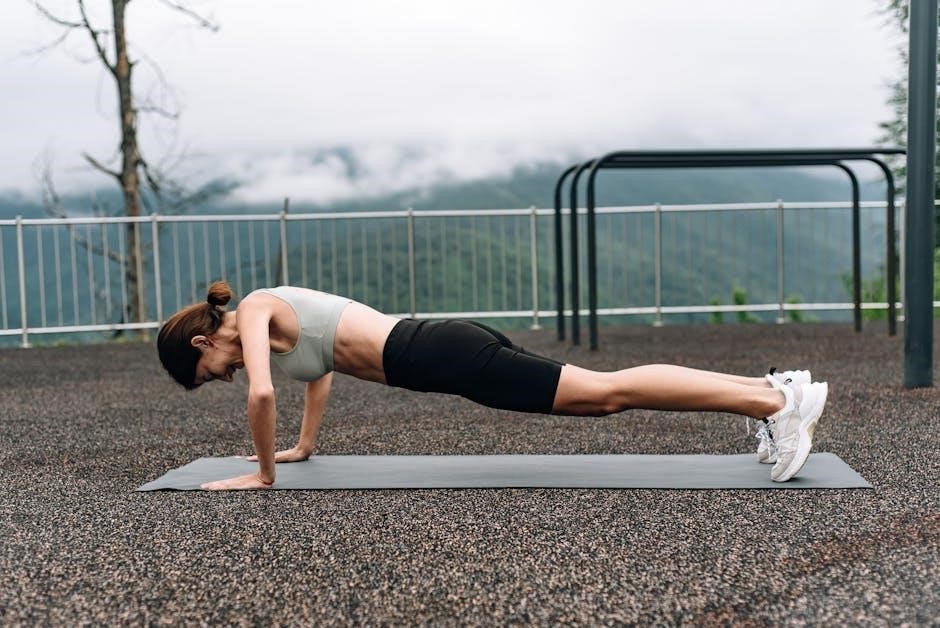
Bicep exercises complete the “pull” day, focusing on developing arm strength and aesthetics. The PPL PDF recommends a variety of exercises to target different parts of the biceps. Barbell curls are a classic choice for building overall mass, allowing for heavier loads; Dumbbell curls offer greater range of motion and can help address muscle imbalances.
Hammer curls target the brachialis and brachioradialis, contributing to overall arm size. Concentration curls provide focused isolation, maximizing muscle activation. Cable curls maintain constant tension throughout the movement. Remember to control the weight and avoid swinging to maintain proper form and prevent injury. Prioritize quality over quantity for optimal results.
Forearm Exercises
Often overlooked, forearm exercises are crucial for grip strength and overall arm development, detailed within the PPL PDF. Wrist curls, performed with palms up, target the wrist flexors, improving curling ability. Reverse wrist curls, with palms down, strengthen the wrist extensors, aiding in gripping.
Farmer’s walks, holding heavy dumbbells, build incredible grip endurance and forearm mass. Plate pinches challenge grip strength and forearm stability. Cable wrist curls offer constant tension. Incorporating these exercises enhances performance in other lifts and daily activities. Focus on controlled movements and progressive overload to maximize gains. Don’t neglect these smaller muscles – they contribute significantly to overall arm strength and functionality!
Day 3: Legs Workout
Leg day, as outlined in the PPL PDF, is fundamental for building lower body strength and power. Focus on compound movements like squats, leg press, and deadlifts to maximize muscle activation. These exercises target the quads, hamstrings, and glutes simultaneously.
Supplement these with isolation exercises like leg extensions for quadriceps and hamstring curls for the back of the legs. Don’t forget calf raises to develop those lower leg muscles! Consider hip thrusts and glute bridges for glute development. Core work can also be integrated on leg day. Prioritize proper form and progressive overload for optimal results. Remember to warm up thoroughly before and cool down afterward.
Quadriceps Exercises
The quadriceps, crucial for leg strength, are targeted with several exercises within the PPL PDF routine. Barbell squats are a cornerstone, building overall lower body mass and power. Leg press offers a safer alternative, allowing for heavy loads with reduced spinal stress.
Leg extensions provide focused isolation, maximizing quad development. Front squats emphasize the quads even further, challenging stability and form. Lunges, both stationary and walking, are excellent for unilateral strength and balance. Remember to control the movement throughout each exercise, focusing on a full range of motion. Prioritize proper technique to prevent injury and maximize effectiveness.
Hamstring Exercises
The hamstrings, opposing the quads, are vital for balanced leg development, detailed in the PPL workout PDF. Romanian deadlifts (RDLs) are a primary exercise, emphasizing the hamstring stretch and strengthening the posterior chain. Lying leg curls provide focused isolation, building hamstring size and definition.
Good mornings are another effective exercise, but require careful form to avoid injury. Glute-ham raises are advanced, demanding significant hamstring and glute strength. Hip thrusts, while primarily targeting the glutes, also heavily engage the hamstrings. Remember to maintain a controlled tempo and focus on feeling the hamstring contraction throughout each repetition.

Calf Exercises
Calf development is often overlooked, but crucial for overall leg aesthetics, as outlined in the PPL workout PDF. Standing calf raises, performed on a calf raise machine or with dumbbells, target the gastrocnemius, the larger calf muscle. Seated calf raises focus on the soleus, a deeper calf muscle, providing a more complete development.
Varying foot position – toes in, toes out, and straight – can target different areas of the calf. Incorporate both high-rep sets for endurance and lower-rep, heavier sets for strength. Don’t neglect the importance of a full range of motion, stretching at the bottom and contracting powerfully at the top.
Day 4: Rest or Active Recovery
Following three consecutive days of intense training – Push, Pull, and Legs – Day 4 is dedicated to either complete rest or active recovery, as detailed in the PPL workout PDF. Complete rest allows muscles to fully repair and rebuild, preventing overtraining. However, active recovery can enhance blood flow and reduce muscle soreness.
Active recovery options include light cardio like walking, swimming, or cycling at a low intensity. Stretching and foam rolling are also beneficial for improving flexibility and reducing muscle tension. Avoid strenuous activity that could further stress the muscles. Prioritize hydration and nutrition to support the recovery process.
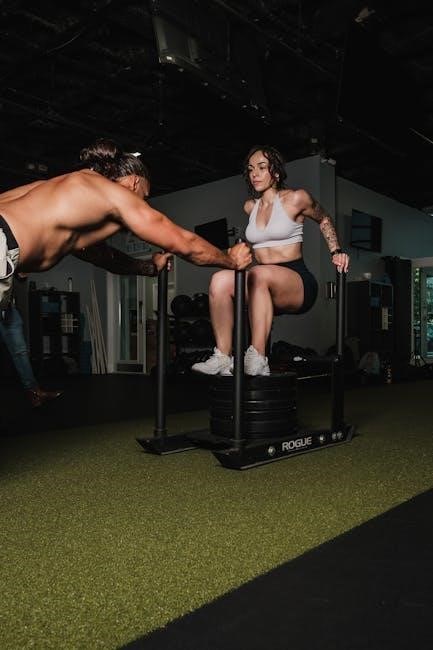
Advanced PPL Considerations
For optimal results, understand Rate of Perceived Exertion (RPE), prioritize progressive overload, and maintain proper form—key elements in the PPL PDF.
Understanding Rate of Perceived Exertion (RPE)
RPE is a crucial component of the PPL workout plan PDF, representing how challenging a set feels to you, independent of the actual weight lifted. It’s a subjective scale, typically ranging from 1 to 10, where 1 signifies minimal effort and 10 indicates maximal exertion.
Throughout the 4-week routine detailed in the PDF, you’ll frequently encounter RPE references. Utilizing RPE allows for auto-regulation, meaning you adjust the weight or reps based on your daily capacity. For example, an RPE 8 set should feel like you have two reps “left in the tank.”
This method is superior to solely relying on pre-determined weights, as factors like sleep, stress, and nutrition impact your strength levels. Mastering RPE ensures consistent progress and minimizes the risk of overtraining, as highlighted within the downloadable PDF.
Importance of Progressive Overload
Progressive overload is a cornerstone principle detailed within the push pull legs workout plan PDF, essential for continuous muscle growth and strength gains. It involves gradually increasing the demands placed upon your muscles over time. This isn’t solely about adding weight; it encompasses increasing reps, sets, reducing rest times, or enhancing exercise difficulty.

The PDF emphasizes that consistently performing the same workout will lead to plateaus. To overcome this, the plan advocates for systematically challenging your muscles beyond their current capacity.
Tracking your workouts and striving for small, incremental improvements each session is vital. The PDF provides guidance on how to implement progressive overload effectively, ensuring sustainable progress and preventing stagnation. Remember, consistent challenge drives adaptation!
Proper Form and Technique
The push pull legs workout plan PDF strongly emphasizes prioritizing proper form and technique over lifting heavy weights. Maintaining correct form minimizes the risk of injury and maximizes muscle activation. The document details that compromised form can lead to ineffective workouts and potential setbacks.
Each exercise within the PDF includes detailed instructions and, ideally, visual demonstrations to guide users; It advises starting with lighter weights to master the movement pattern before increasing the load.
Focus on controlled movements, engaging the target muscle group throughout the entire range of motion. The PDF suggests seeking guidance from a qualified fitness professional if unsure about proper technique, ensuring safe and effective training.

Sample PPL Workout Routine (4-Week Plan)
The provided push pull legs workout plan PDF outlines a structured 4-week program. Weeks 1-2 build a foundation, while weeks 3-4 increase intensity for optimal results!
Week 1-2: Building a Foundation
During the initial two weeks of this push pull legs workout plan, the focus is establishing a solid base. This involves mastering proper form and technique with moderate weights. Prioritize controlled movements over lifting heavy, ensuring each muscle group is adequately prepared for increased intensity.
Expect higher repetitions – typically 10-12 reps per set – to enhance muscular endurance and build a mind-muscle connection. The Rate of Perceived Exertion (RPE) should be around 6-7, meaning the sets feel challenging but manageable. This phase is crucial for preventing injuries and preparing your body for the more demanding weeks ahead. Don’t underestimate the importance of consistent effort and attention to detail during this foundational period.
Week 3-4: Increasing Intensity
Weeks three and four of the push pull legs workout plan mark a shift towards greater challenge and progressive overload. Gradually increase the weight lifted while maintaining strict form. Aim for 6-8 repetitions per set, pushing yourself closer to muscle failure. Your RPE should now be in the 7-8 range – sets should feel significantly harder, requiring more effort.
Introduce variations to exercises to stimulate muscle growth from different angles. Consider incorporating drop sets or supersets to further enhance intensity. Continue prioritizing proper technique to avoid injury. Remember, progressive overload is key; consistently challenge your muscles to adapt and grow stronger. Monitor your body’s response and adjust accordingly, ensuring adequate recovery between sessions.
Nutrition and Recovery for PPL
Optimal muscle growth requires sufficient protein intake, hydration, and sleep. Prioritize these elements alongside your PPL routine for maximized results and efficient recovery!
Protein Intake for Muscle Growth
Protein is absolutely crucial for repairing and building muscle tissue after the demands of a PPL workout split. Adequate intake ensures your body has the necessary building blocks to recover and adapt to the training stimulus. Generally, aiming for around 0.8 to 1 gram of protein per pound of body weight is a solid starting point for individuals engaged in intense resistance training.
Distribute your protein intake throughout the day, consuming a source with each meal. Good sources include lean meats, poultry, fish, eggs, dairy, and plant-based options like beans, lentils, and tofu. Consider a post-workout protein shake to quickly deliver amino acids to your muscles. Remember, consistent protein consumption is key to supporting muscle growth and optimizing your PPL results.
Importance of Hydration
Maintaining proper hydration is paramount when following a rigorous PPL workout plan. Water plays a vital role in numerous bodily functions, including muscle function, nutrient transport, and temperature regulation – all critical during intense training sessions. Dehydration can significantly impair performance, leading to reduced strength, endurance, and increased risk of cramping.
Aim to drink water consistently throughout the day, not just during your workouts. A good guideline is to consume at least half an ounce to an ounce of water per pound of body weight daily. Electrolyte drinks can be beneficial, especially after particularly strenuous workouts, to replenish lost minerals. Pay attention to your thirst cues and proactively hydrate to optimize recovery and maximize your PPL gains.
Sleep and Muscle Recovery
Adequate sleep is non-negotiable for optimal muscle recovery and growth when undertaking a PPL workout routine. During sleep, your body releases hormones crucial for muscle repair and protein synthesis. Insufficient sleep hinders these processes, potentially leading to overtraining and stalled progress.
Aim for 7-9 hours of quality sleep each night. Establish a consistent sleep schedule, create a relaxing bedtime routine, and ensure a dark, quiet, and cool sleep environment. Prioritizing sleep isn’t simply about rest; it’s an active component of your training regimen. Without sufficient recovery, your muscles won’t adapt to the stress of your PPL workouts, diminishing your results.
Potential Risks and Precautions
Overtraining is a key risk; proper warm-up and cool-down routines are vital. This information is for guidance only and isn’t professional medical advice.
Avoiding Overtraining
Overtraining can severely hinder muscle gains and lead to injury. A PPL split, while effective, requires careful monitoring of your body’s signals. Ensure adequate rest days are incorporated – the schedule includes one, but listen to your body and take more if needed.
Pay close attention to Rate of Perceived Exertion (RPE). Consistently pushing sets to failure without sufficient recovery will quickly lead to overtraining. Prioritize proper form over lifting heavy weight; this minimizes injury risk and maximizes muscle engagement.
Varying exercises within each muscle group can also help prevent overuse injuries. Don’t be afraid to deload – reduce weight and volume – periodically to allow your body to fully recover and adapt. Ignoring fatigue is a surefire path to setbacks.
Warm-up and Cool-down Routines
Prioritizing warm-ups and cool-downs is crucial for injury prevention and optimal performance. Before each PPL workout, perform 5-10 minutes of dynamic stretching, focusing on the muscle groups you’ll be targeting. Examples include arm circles, leg swings, and torso twists.
A proper warm-up increases blood flow, improves joint mobility, and prepares your muscles for exertion. Following your workout, dedicate 5-10 minutes to static stretching, holding each stretch for 20-30 seconds.
This helps improve flexibility, reduce muscle soreness, and promote recovery. Don’t skip these essential components – they significantly contribute to long-term progress and well-being.
The information presented within this push-pull-legs workout plan is intended for general informational and educational purposes only. It should not be considered a substitute for professional medical or fitness advice. Always consult with a qualified healthcare provider or certified personal trainer before starting any new exercise program.
Individual results may vary, and it’s essential to listen to your body and adjust the routine as needed. This plan doesn’t diagnose, treat, cure, or prevent any disease.
We are not liable for any injuries or health complications arising from the use of this information. Prioritize safety and seek expert guidance to ensure a personalized and effective workout experience.
Leave a Reply