
Manual Machine Press: A Comprehensive Overview (12/24/2025 05:09:13)
Manual machine presses are essential for shaping materials, ranging from a few pounds to 80,000 tons of force, and offer diverse applications across industries.
Manual machine presses represent a foundational technology in manufacturing, utilized for a vast spectrum of forming operations. These machines, differing significantly in capacity – from a mere few pounds to an impressive 80,000 tons – are pivotal in shaping raw materials into finished products. Unlike their automated counterparts, manual presses rely on human power to generate the necessary force for tasks like stamping, forging, and punching.
The core principle involves an operator directly applying pressure, making them suitable for small-scale production, prototyping, and applications demanding precise control. Understanding the diverse types and functionalities of these presses is crucial, as they continue to play a vital role alongside hydraulic, pneumatic, and fully mechanical systems in modern manufacturing environments.
Historical Development of Manual Presses
Manual presses boast a rich history, evolving from simple hand-operated devices to more sophisticated mechanical systems. Early iterations, predating widespread industrialization, were primarily used for tasks like printing and small-scale metalworking, relying entirely on human muscle power. As manufacturing demands grew, so did the need for increased force and efficiency.
The development of lever and screw mechanisms significantly enhanced the mechanical advantage, allowing operators to exert greater pressure with less effort. These advancements paved the way for the creation of larger, more robust presses capable of handling heavier materials and more complex forming operations. While modern automated presses dominate large-scale production, manual presses retain relevance due to their simplicity, precision, and cost-effectiveness in specialized applications.
Applications of Manual Machine Presses Across Industries
Applications of Manual Machine Presses
Manual machine presses find diverse applications across numerous industries, proving invaluable for shaping, forging, and stamping raw materials. In metalworking, they’re used for tasks like bending, riveting, and forming sheet metal components. The jewelry industry utilizes them for precise metal shaping and setting stones. Educational institutions employ manual presses to teach fundamental manufacturing principles.
Furthermore, they are crucial in small-scale production runs where automation isn’t economically viable. Their precision makes them ideal for prototyping and creating custom parts. From crafting intricate designs to performing simple assembly operations, manual presses offer a versatile and cost-effective solution for a wide range of manufacturing needs, complementing larger automated systems.

Types of Manual Machine Presses
Manual presses encompass lever, screw, arbor, and flypresses, each designed with unique mechanics and advantages for specific applications and operational requirements.
Lever Presses: Design and Functionality
Lever presses represent a foundational type of manual machine press, utilizing a simple yet effective mechanical advantage system. These presses feature a hand lever connected to a ram, allowing operators to apply significant force with relatively less effort. The design typically incorporates a robust frame to withstand the stresses generated during operation.
Functionally, the lever arm amplifies the force applied by the operator, transferring it to the workpiece. This makes lever presses ideal for tasks requiring controlled, concentrated pressure, such as riveting, bending, and forming. Their straightforward construction contributes to their durability and ease of maintenance. They are often favored for smaller-scale operations where precision and control are paramount, offering a reliable solution for various manufacturing processes.
Screw Presses: Mechanics and Advantages
Screw presses employ a lead screw mechanism to convert rotational motion into linear force, offering a distinct advantage in controlled pressure application. An operator turns a handle, rotating the screw which then drives a ram downwards onto the workpiece. This design allows for precise control over the applied force, making it suitable for tasks demanding accuracy.
The mechanics of a screw press provide a significant mechanical advantage, enabling operators to generate substantial pressure with manageable effort. Advantages include consistent force delivery, suitability for various materials, and relatively simple operation. They excel in applications like pressing, squeezing, and forming, particularly where a slow, deliberate force is required. Their robust construction ensures durability and long-term reliability in manufacturing settings.
Arbor Presses: Precision and Small-Scale Operations
Arbor presses are specifically designed for precision work and small-scale operations, offering a focused application of force. These presses utilize a lever arm connected to a ram, which descends upon the workpiece when pressure is applied. Their compact size and straightforward mechanics make them ideal for benchtop use in workshops and laboratories.
The key advantage of arbor presses lies in their accuracy and control. They are frequently used for tasks like riveting, bending, forming, and light stamping where precise placement of force is crucial. Arbor presses are particularly well-suited for delicate assemblies and prototyping. Their simple design contributes to ease of use and maintenance, making them a valuable tool for detailed manufacturing and repair work.
Flypresses: Speed and Traditional Use
Flypresses represent a historically significant type of manual machine press, renowned for their speed and traditional applications in metalworking. These presses operate using a flywheel and eccentric gear system, converting rotational energy into linear motion. The momentum of the flywheel delivers a rapid, forceful stroke, making flypresses efficient for high-volume production of simpler components.
Traditionally, flypresses were widely used for tasks like blanking, piercing, and forming sheet metal. Skilled operators could achieve impressive production rates due to the press’s quick cycling time. While largely superseded by more automated technologies, flypresses still find niche applications where their speed and simplicity are advantageous. They require significant operator skill and adherence to strict safety protocols due to their rapid operation.
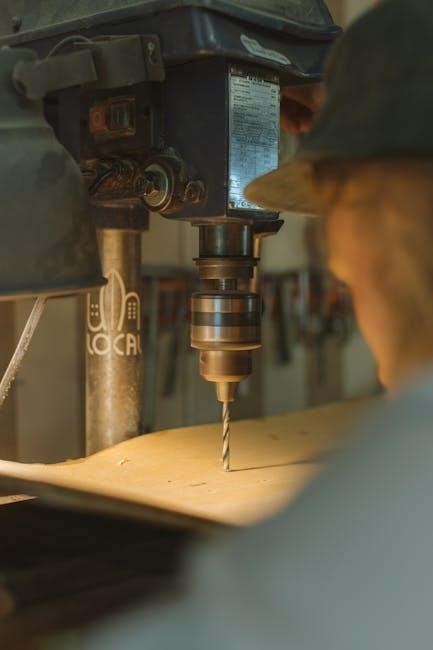
Key Components of a Manual Machine Press
Essential components include the frame (often a link frame for heavy presses), slider crank mechanism, eccentric gears, crankshafts, and precisely engineered dies and tooling.
Frame Construction: Link Frame and its Significance
Frame construction is paramount in a manual machine press, directly influencing its stability and capacity. The Link Frame design represents a robust solution, particularly for larger, heavier presses exceeding 400 tons. Unlike monolithic frames, the Link Frame consists of separate components – the crown, pillars, and bed – interconnected by long tie rods.
This modular approach offers significant advantages. It facilitates easier manufacturing and assembly of large-scale presses. More importantly, it enhances structural integrity by distributing stress across multiple elements. The tie rods maintain precise alignment and prevent deformation under immense pressure. This construction method is crucial for maintaining accuracy and extending the press’s operational lifespan, ensuring consistent performance during demanding forging, stamping, and shaping operations.
Slider Crank Mechanism: The Core Drive System
The Slider Crank Mechanism forms the fundamental drive system within nearly all manual machine presses, converting rotational motion into linear force. While variations exist in power sources – manual, pneumatic, or hydraulic – the core principle remains consistent. This mechanism utilizes a crankshaft, connected to a slider (the press’s ram or platen), to generate the downward pressing action.
The crankshaft’s rotation, driven by manual effort, translates into a reciprocating linear motion of the slider. Different crankshaft designs – Eccentric Gear, Crank Shaft, and Eccentric Shaft – influence the press’s speed, stroke length, and force characteristics. The simplicity and reliability of this mechanism contribute to the enduring popularity of manual presses, providing a direct and controllable means of applying force for various forming processes.
Eccentric Gear, Crank Shaft, and Eccentric Shaft Drives
Although all manual presses rely on the Slider Crank Mechanism, the specific type of crank employed significantly impacts performance. Eccentric Gear drives offer a consistent, though potentially slower, stroke. Crank Shaft designs are common, providing a balanced and efficient transfer of manual power to the slider. Finally, Eccentric Shaft drives represent another variation, influencing the press’s operational characteristics.
The choice between these drive types depends on the intended application. Each configuration affects the force delivery, stroke length, and overall speed of the press. Understanding these differences is crucial for selecting a manual press suited to specific forming, forging, or stamping tasks. These variations allow for customization to meet diverse industrial needs.
Die and Tooling: Essential for Shaping Materials
Die and tooling are absolutely critical components in any manual machine press operation, directly determining the final shape of the workpiece. These specialized tools interface with the press’s slider, applying focused force to transform raw materials. The design and precision of the die dictate the accuracy and quality of the formed part;
Different materials and desired shapes necessitate unique tooling configurations. Proper die selection ensures efficient material flow and prevents defects. Investing in high-quality dies extends the press’s capabilities and minimizes downtime. Careful maintenance and regular inspection of tooling are essential for consistent performance and safety during operation.
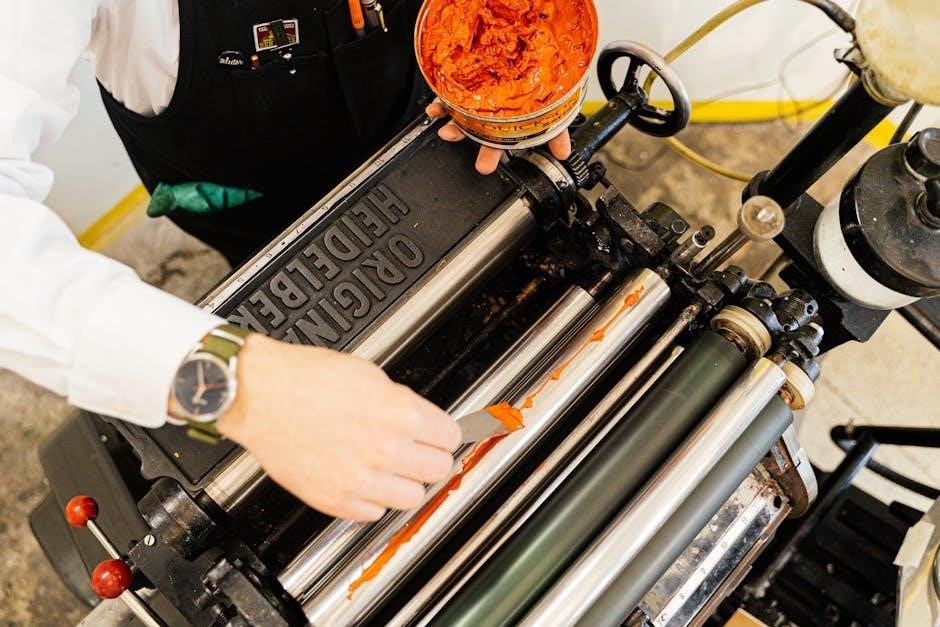
Operating Principles and Safety Considerations
Manual presses rely on operator-applied force, demanding strict adherence to safety procedures, including guards and emergency stops, to mitigate potential hazards.
Manual Operation: Applying Force and Control
Manual machine presses fundamentally depend on the operator’s physical exertion to generate the necessary force for material deformation. This direct application of power necessitates a thorough understanding of the press’s mechanics and the material properties being worked with. The operator initiates the process, carefully positioning the workpiece and tooling before applying consistent, controlled pressure.
Control is paramount; maintaining a steady force prevents material damage or tooling failure. Unlike automated systems, manual presses require constant operator attention and adjustment throughout the pressing cycle. This hands-on approach allows for flexibility in handling varied tasks and materials, but also places a greater responsibility on the operator’s skill and awareness. Precise control ensures the desired shape and dimensions are achieved with each operation;
Safety Mechanisms: Guards, Emergency Stops, and Procedures
Manual machine presses, while versatile, demand stringent safety protocols due to the potential for injury from applied force. Essential safety mechanisms include robust guarding systems, designed to prevent operator access to the point of operation during the pressing cycle. These guards act as physical barriers, minimizing the risk of hand or finger entrapment.
Prominently placed emergency stop buttons allow for immediate cessation of operation in unforeseen circumstances. Comprehensive safety procedures, including pre-operational checks and proper training, are crucial. Operators must be thoroughly familiar with the press’s operation and potential hazards. Regular inspections and maintenance of safety features are vital to ensure their continued effectiveness, protecting personnel from potential harm during operation.
Common Safety Hazards and Prevention Techniques
Manual machine presses present several safety hazards, primarily relating to the forceful application of pressure. Hand and finger injuries are common if guards are bypassed or malfunctioning. Unexpected movement of the slider or workpiece poses a significant risk, necessitating secure clamping and proper material handling.
Prevention techniques include consistently using appropriate personal protective equipment (PPE), such as safety glasses and gloves. Maintaining a clean and organized workspace minimizes trip hazards and ensures clear visibility. Thorough pre-operational inspections, verifying guard functionality and emergency stop responsiveness, are paramount. Strict adherence to established operating procedures, coupled with comprehensive operator training, significantly reduces the likelihood of accidents and promotes a safe working environment.
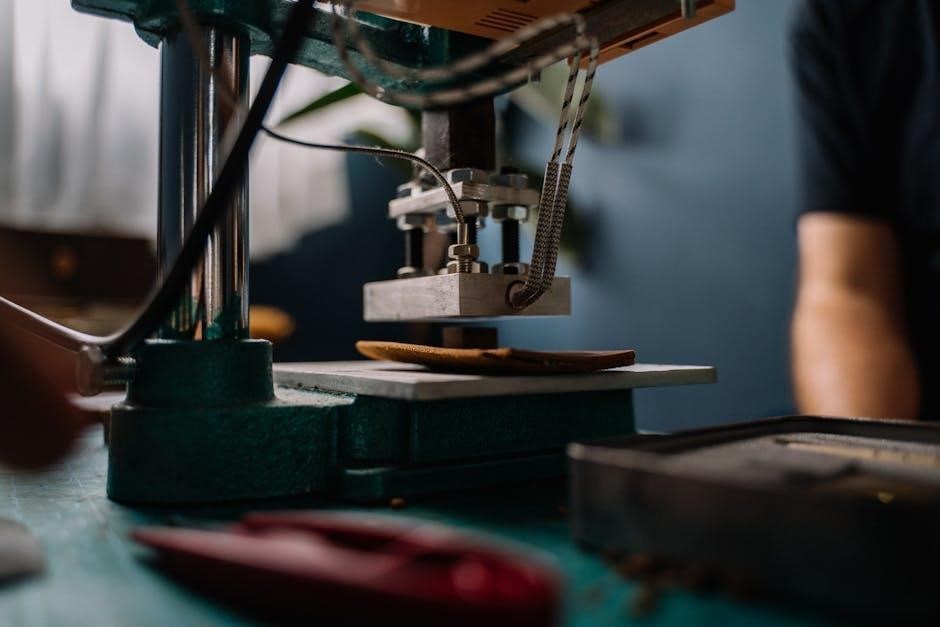
Maintenance and Troubleshooting
Regular maintenance, including lubrication and wear prevention, is crucial for longevity. Addressing common mechanical issues promptly ensures optimal performance and minimizes downtime.
Regular Maintenance Schedules for Longevity
Establishing a consistent maintenance schedule is paramount for extending the lifespan and ensuring the reliable operation of a manual machine press. Daily checks should include visual inspections for any loose parts, damage to the frame, or unusual wear patterns on critical components like the slider crank mechanism.
Weekly tasks should encompass thorough lubrication of all moving parts, referencing the manufacturer’s guidelines for appropriate lubricants. Monthly inspections should focus on the tie rods within the link frame construction, verifying their tension and integrity.
Furthermore, a quarterly deep-clean, removing debris and old lubricant, is recommended. Annual servicing by a qualified technician is vital, involving a comprehensive assessment of all components and replacement of worn parts to prevent catastrophic failures and maintain optimal performance.
Troubleshooting Common Mechanical Issues
Addressing mechanical issues promptly is crucial for minimizing downtime with a manual machine press. A common problem is inconsistent force application, often stemming from improper lubrication of the slider crank mechanism or wear within the eccentric gear, crankshaft, or eccentric shaft drives.
Excessive noise during operation can indicate loose tie rods in the link frame or bearing failure. Difficulty in maintaining consistent pressure may point to issues with the die and tooling, requiring adjustment or replacement.
Regularly inspect for cracks or deformation in the frame construction. If the press fails to return to its original position, investigate the spring mechanism or linkages. Always prioritize safety and consult a qualified technician for complex repairs.
Lubrication and Wear Prevention
Consistent lubrication is paramount for extending the lifespan of a manual machine press and preventing premature wear. Focus on the slider crank mechanism, eccentric gear, crankshaft, and eccentric shaft drives, utilizing a high-quality industrial lubricant. Regularly grease all moving parts, including linkages and pivot points, to reduce friction and heat buildup.
Inspect the link frame tie rods for corrosion and ensure they are properly tightened. Clean the press regularly to remove debris that can act as abrasives.
Periodically check and replace worn bushings and bearings. Proper lubrication minimizes metal-on-metal contact, significantly reducing wear and tear, and ensuring smooth, efficient operation.

Comparison with Other Press Types
Manual presses differ from hydraulic, pneumatic, and mechanical types in their power source and capacity, offering a unique balance of control and simplicity.
Manual vs. Hydraulic Presses: A Detailed Comparison
Manual presses rely on human power, offering precision for small-scale tasks, while hydraulic presses utilize fluid pressure to generate substantial force, ideal for heavy-duty applications. Hydraulic systems provide consistent power throughout the stroke, unlike the potentially varying force of a manual press.
However, hydraulic presses require complex systems – pumps, valves, and reservoirs – increasing cost and maintenance. Manual presses are simpler, more affordable, and don’t need external power sources.
Hydraulic presses excel in tonnage capacity, reaching tens of thousands of tons, whereas manual presses are limited by human strength. Manual presses offer greater control for delicate operations, while hydraulics prioritize sheer power and speed for forming, forging, and stamping. Ultimately, the choice depends on the specific application’s force and precision requirements.
Manual vs. Pneumatic Presses: Advantages and Disadvantages
Manual presses offer a cost-effective and simple solution for low-volume, precision work, relying solely on operator force. Pneumatic presses, conversely, utilize compressed air for rapid, repeatable operations, excelling in high-volume production. Pneumatic systems deliver faster cycle times than manual operation, boosting efficiency.
However, pneumatic presses require an air compressor and associated infrastructure, adding to initial and running costs. Manual presses are portable and require no external power. Pneumatic presses provide consistent force, while manual force can vary.
Manual presses are ideal for delicate tasks needing tactile feedback, while pneumatics are suited for repetitive tasks where speed and consistency are paramount. The choice hinges on production volume, budget, and the required level of control.
Manual vs. Mechanical Presses: Force and Precision Differences
Manual presses, driven by human power, are best for applications needing finesse and tactile control, offering precision for smaller-scale operations. Mechanical presses, utilizing a motor and flywheel, generate significantly higher forces suitable for heavy-duty forming and forging; While manual presses offer a direct feel for the process, mechanical presses deliver consistent, powerful strokes.
Mechanical presses excel in high-volume production due to their speed and force capacity, but lack the nuanced control of a manual setup. Manual presses are simpler and more affordable, while mechanical presses require substantial investment and maintenance.
The choice depends on the material, required force, and production scale. Manual presses prioritize precision, while mechanical presses prioritize power and speed.
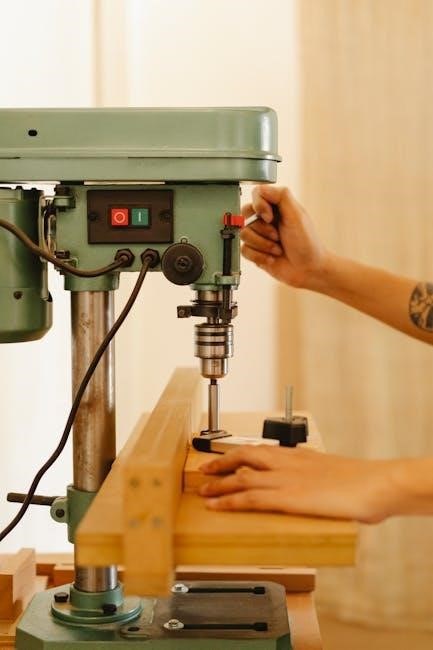
Future Trends in Manual Press Technology
Future trends include integrating ergonomic designs and exploring hybrid manual-assist systems, ensuring manual presses remain relevant in modern manufacturing processes.
Integration of Ergonomic Designs
Ergonomic designs are becoming increasingly crucial in manual press technology, focusing on reducing operator fatigue and enhancing workplace safety. Traditional manual presses often require significant physical exertion, potentially leading to musculoskeletal disorders. Modern advancements prioritize adjustable handle heights, optimized lever angles, and improved grip designs to minimize strain.
These features aim to distribute force more effectively, reducing the physical demands on the operator. Furthermore, incorporating vibration dampening technologies and user-friendly control mechanisms contributes to a more comfortable and efficient working environment. The goal is to lighten the burden of manual tasks, improving operator well-being and productivity while maintaining the precision and control offered by manual presses.
Potential for Hybrid Manual-Assist Systems
Hybrid manual-assist systems represent a promising evolution in manual press technology, blending human control with automated assistance. These systems aim to reduce operator effort while preserving the precision and responsiveness inherent in manual operation. Concepts include power-assist mechanisms that amplify force applied by the operator, making demanding tasks more manageable.
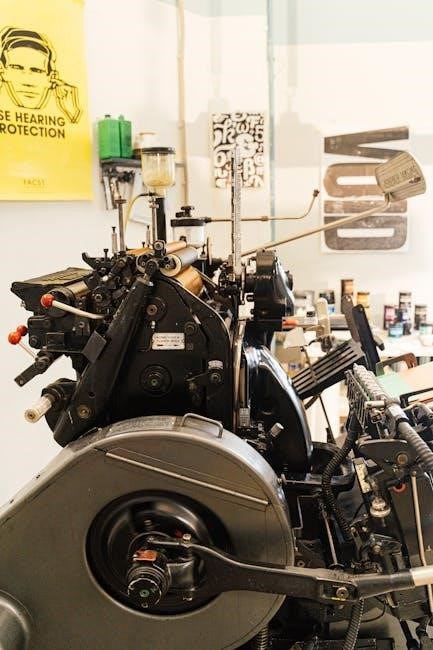
Another approach involves integrating sensors and controls to provide guided movements or automated pre-positioning of materials. Such systems could significantly reduce fatigue and improve consistency, particularly for repetitive operations. Utilizing technology to lighten the burden of manual tasks is key. These hybrid solutions offer a pathway to enhance productivity and maintain the skilled craftsmanship associated with manual presses.

The Role of Manual Presses in Modern Manufacturing
Despite advancements in automated press technology, manual machine presses retain a vital role in modern manufacturing, particularly for small-scale production, prototyping, and specialized tasks. Their simplicity and direct control offer advantages in situations demanding flexibility and precision. Manual presses excel in applications where frequent die changes or customized operations are required, avoiding the complexities of reprogramming automated systems.
Furthermore, they provide a cost-effective solution for low-volume runs and educational settings. The ability to ‘feel’ the process allows skilled operators to make real-time adjustments, crucial for delicate materials or intricate forming. Utilizing technology can lighten the burden, but manual skill remains valuable.
Leave a Reply