Honeywell RTH2300 Installation Manual: Article Plan
This comprehensive guide details the installation of the Honeywell RTH2300 thermostat, covering pre-installation checks, step-by-step wiring, programming, troubleshooting, and warranty details․
The Honeywell RTH2300 is a programmable thermostat designed for efficient home climate control, offering user-friendly features and reliable performance for optimal comfort and energy savings․
Overview of the RTH2300 Series
The Honeywell RTH2300 series encompasses a range of programmable thermostats, offering both basic and advanced functionalities to suit diverse homeowner needs․ These models provide precise temperature control, customizable scheduling, and energy-saving features․ Commonly found across various heating and cooling systems, the RTH2300 is known for its ease of use and reliable operation․ Manuals․plus provides access to various language versions, indicating its global availability․ It’s a popular choice for upgrading older, non-programmable thermostats, enhancing home comfort and reducing energy consumption․
Key Features and Benefits
The Honeywell RTH2300 boasts several key features, including programmable 7-day scheduling for customized comfort and energy savings․ Its easy-to-read display simplifies operation, while compatibility with various HVAC systems ensures broad applicability․ Benefits include reduced energy bills through efficient temperature management, enhanced home comfort with precise control, and straightforward installation․ Access to downloadable PDF manuals, as found on manuals․plus, further simplifies setup and troubleshooting․ The series offers a user-friendly experience for both basic and advanced users․
Pre-Installation Checklist
Before starting, gather necessary tools, review safety precautions, and confirm your HVAC system’s compatibility with the Honeywell RTH2300 thermostat․
Tools Required for Installation
Successfully installing your Honeywell RTH2300 requires a few essential tools․ You’ll need a small Phillips head screwdriver for securing the thermostat base and cover plates․ A flathead screwdriver may also be useful for certain wiring connections․
Wire strippers are crucial for preparing the thermostat wires, ensuring clean connections․ A level will guarantee the thermostat is mounted straight for accurate readings․ Finally, a digital multimeter can be helpful for testing wire voltages, though not strictly required․
Safety Precautions
Prioritize safety during RTH2300 installation! Always turn off power to your HVAC system at the breaker box before beginning any wiring work․ This prevents electrical shock and potential damage to your equipment․
Exercise caution when handling wires; even low-voltage wires can carry a charge․ If unsure about any step, consult a qualified HVAC technician․ Avoid working in damp conditions․ Properly dispose of old batteries and packaging materials responsibly․
Compatibility Check (HVAC System)
Ensure your HVAC system is compatible with the Honeywell RTH2300 before installation․ The RTH2300 typically supports standard 24V heating and cooling systems․
It works with most conventional gas, oil, and electric systems, but may not be suitable for proprietary or line-voltage systems․ Verify your system’s wiring configuration and voltage․ If you have a heat pump or a millivolt system, confirm compatibility using Honeywell’s online resources or by contacting support․

Step-by-Step Installation Guide
Follow these instructions for a successful installation: remove the old thermostat, identify wires, connect them to the RTH2300 base, and power it on․
Removing the Old Thermostat
Before starting, turn off power to your HVAC system at the breaker box to avoid electrical shock․ Carefully remove the cover of your existing thermostat, often by gently prying it off or releasing a clip․
Take a clear picture of the existing wiring connections for future reference – this is crucial! Disconnect the wires one at a time, labeling each with the corresponding terminal designation (e․g․, R, W, G, Y, C)․
Once all wires are disconnected, remove the old thermostat baseplate from the wall․
Identifying Thermostat Wires
Understanding your existing wiring is vital for a successful installation․ Common wires include R (power), W (heat), Y (cool), G (fan), and C (common – often blue)․ The ‘C’ wire provides continuous power and is highly recommended for the RTH2300․
If you lack a ‘C’ wire, a ‘C-wire adapter’ might be necessary․ Carefully compare your existing wire colors to the terminal labels on your old thermostat․
If unsure, consult a qualified HVAC technician before proceeding – incorrect wiring can damage your system․
Connecting Wires to the RTH2300 Base Plate
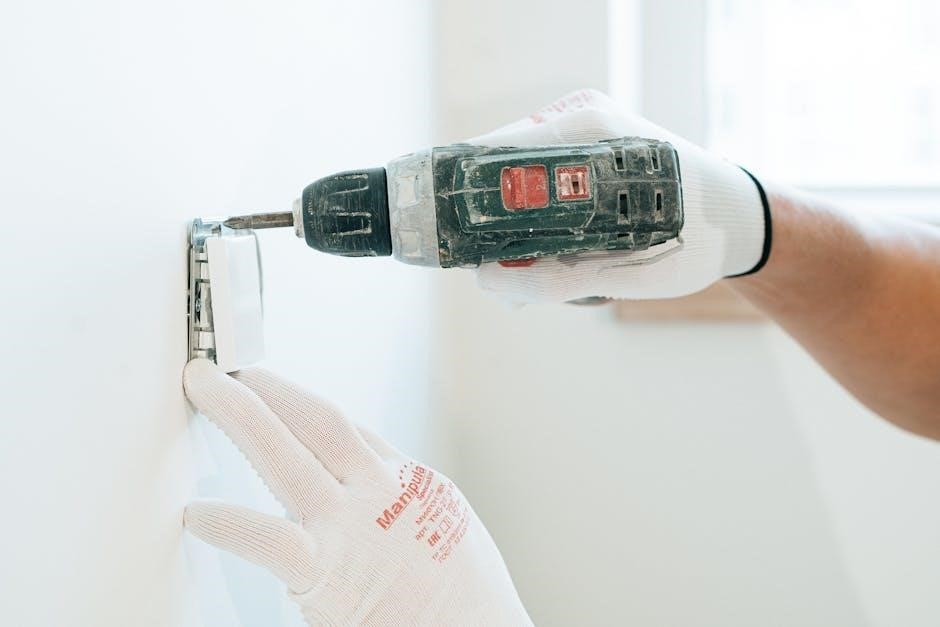
Once wires are identified, connect them to the corresponding terminals on the RTH2300’s base plate․ Use a small screwdriver to loosen the terminal screws, insert the wires securely, and tighten the screws․
Double-check each connection against your wiring diagram․ Ensure no bare wire is exposed to prevent shorts․
A properly secured connection is crucial for accurate thermostat operation and system safety․
Powering Up and Initial Setup
After wiring, install batteries or connect to the C-wire for power․ Then, set the correct date and time, and configure your HVAC system type․
Installing Batteries or Connecting to C-Wire
The RTH2300 can operate on batteries or with a common (C) wire connection․ If using batteries, install two AA alkaline batteries into the compartment, ensuring correct polarity․
For consistent power and to avoid battery changes, a C-wire connection is recommended․ If your system doesn’t have a C-wire, consult a qualified HVAC technician for assistance with adding one․ A C-wire provides continuous power to the thermostat․
Setting the Date and Time
After powering on, the thermostat will prompt you to set the current date and time․ Use the up and down arrow buttons to adjust the year, month, day, hour, and minute․ Confirm each selection by pressing the ‘Set’ or ‘OK’ button․
Accurate date and time settings are crucial for proper scheduling and operation of your RTH2300․ Double-check your entries to ensure correct programming functionality․
Configuring System Type (Heat, Cool, Heat Pump)
The RTH2300 needs to be configured to match your HVAC system type․ Access the system settings menu and select from options like ‘Heat Only’, ‘Cool Only’, or ‘Heat Pump’․ This setting tells the thermostat how to control your heating and cooling equipment․
Incorrect system type selection will result in improper operation․ Refer to your HVAC system’s documentation if unsure which setting to choose․
Programming the Thermostat
Customize your comfort with programmable schedules! Set different temperatures for Home, Away, and Sleep modes to optimize energy use and savings․
Understanding Program Modes (Home, Away, Sleep)
The RTH2300 offers three primary program modes for tailored climate control․ “Home” mode maintains your preferred temperature when you’re present, ensuring comfort․ “Away” mode activates energy-saving settings while you’re gone, reducing heating or cooling costs․ Finally, “Sleep” mode provides a cooler or warmer temperature for optimal sleeping conditions․
Each mode allows for independent temperature settings, creating a personalized schedule that adapts to your lifestyle and maximizes efficiency․ You can easily switch between modes manually or program automatic transitions based on time of day․
Setting Temperature Schedules
The RTH2300’s programmable feature allows customized temperature schedules for each day of the week․ You can define different temperature settings for “Wake,” “Leave,” “Return,” and “Sleep” periods․ This optimizes comfort and energy savings by automatically adjusting the temperature based on your routine․
Access the programming menu to set specific times and temperatures for each period․ Consider your daily activities when creating a schedule to ensure optimal efficiency and personalized comfort throughout the day and night․
Using Temporary Holds and Overrides
The Honeywell RTH2300 offers temporary holds and overrides for immediate temperature adjustments․ A “Hold” maintains a set temperature indefinitely until canceled, bypassing the programmed schedule․ An “Override” adjusts the temperature for a specified duration, then reverts to the regular schedule․
These features are ideal for unexpected changes in plans or short-term comfort needs․ Easily activate holds or overrides through the thermostat’s interface for convenient, on-demand temperature control without altering your long-term programming․

Troubleshooting Common Issues
This section addresses frequent problems, including power failures, inaccurate readings, and connectivity issues, providing solutions for a smoothly functioning Honeywell RTH2300 thermostat․
Thermostat Not Powering On
If your RTH2300 fails to power on, first verify battery installation, ensuring correct polarity․ If using a C-wire, confirm it’s securely connected at both the thermostat and furnace/HVAC unit․ Check the circuit breaker for the HVAC system; a tripped breaker will prevent power․
Inspect wiring connections for looseness or corrosion․ A faulty transformer can also cause this issue; professional diagnosis may be required․ Finally, ensure the thermostat is compatible with your system․
Incorrect Temperature Readings
If the RTH2300 displays inaccurate temperatures, ensure it isn’t exposed to direct sunlight, drafts, or heat-generating appliances․ Verify proper thermostat placement, away from external influences․ Calibrate the temperature within the thermostat’s settings menu if a consistent offset exists․
Confirm the thermostat is level for accurate sensing․ A failing temperature sensor within the unit may require professional replacement․ Check for obstructions blocking airflow around the thermostat․
Connectivity Problems (if applicable)
For RTH2300 models with Wi-Fi capabilities, connectivity issues can arise․ Ensure your home Wi-Fi network is functioning correctly and the thermostat is within range․ Double-check the entered Wi-Fi password for accuracy during setup․ Restart both your router and the thermostat to refresh the connection․
Verify the thermostat’s firmware is up-to-date via the Honeywell Home app․ Interference from other devices may also disrupt the signal; repositioning can help․

Advanced Features and Settings
Explore customizable options like fan control modes, filter change reminders for optimal HVAC performance, and personalized display settings for enhanced usability․
Fan Control Options
The Honeywell RTH2300 offers versatile fan control settings to optimize comfort and air circulation․ Users can select “Auto” for fan operation only during heating or cooling cycles, ensuring efficient energy use․ “On” mode keeps the fan running continuously, providing consistent air mixing and potentially improving air quality;
Furthermore, the “Circulate” setting periodically activates the fan, even when heating or cooling isn’t required, to maintain even temperatures throughout the home․ These options allow for personalized climate control based on individual preferences and needs․
Filter Change Reminders
Maintaining a clean air filter is crucial for HVAC system efficiency and indoor air quality․ The Honeywell RTH2300 features a programmable filter change reminder to help users stay on schedule․ You can set the thermostat to alert you after a specified period – typically 1 to 12 months – of runtime․
This proactive feature prevents reduced airflow, increased energy consumption, and potential system damage, ensuring optimal performance and a healthier home environment․ Regular filter changes are highly recommended․
Display Customization
The Honeywell RTH2300 allows for basic display customization to enhance user experience․ Users can typically adjust the backlight brightness for optimal visibility in various lighting conditions․ Some models may offer options to toggle between displaying the setpoint temperature or the current room temperature prominently․
While not extensive, these settings allow for a personalized and comfortable viewing experience, ensuring easy readability and convenient thermostat operation․

RTH2300 Manual Resources
Access official Honeywell support, downloadable PDFs, and frequently asked questions to assist with installation, programming, and troubleshooting your RTH2300 thermostat․
Official Honeywell Support Website
Honeywell’s official website provides extensive resources for the RTH2300, including detailed manuals, troubleshooting guides, and FAQs․ You can find answers to common installation questions, explore video tutorials demonstrating wiring procedures, and access the latest software updates if applicable․
Directly contacting Honeywell support via their online chat or phone line offers personalized assistance for complex issues․ The website’s search function quickly locates relevant information, ensuring a smooth installation experience and ongoing thermostat management․
Downloadable PDF Manuals
Accessing the Honeywell RTH2300’s PDF manual offers a convenient offline resource for installation and operation․ These downloadable guides contain detailed diagrams of wiring configurations, programming instructions, and troubleshooting steps․
PDFs are ideal for printing or viewing on various devices without an internet connection․ Multiple language versions are often available, catering to a wider audience․ Websites like Manuals․plus host these manuals, providing easy access to the official Honeywell documentation for your thermostat․
Frequently Asked Questions (FAQ)
Common questions regarding the Honeywell RTH2300 installation often center around wire identification and compatibility․ Users frequently inquire about C-wire requirements and how to handle systems without one․
Programming inquiries are also prevalent, specifically regarding scheduling and temporary overrides․ Troubleshooting FAQs address issues like unresponsive displays or inaccurate temperature readings․ Online resources and Honeywell’s support website provide answers to these frequently asked questions, simplifying the installation process․
Warranty Information
The RTH2300 thermostat is covered by a limited warranty protecting against manufacturing defects․ Details regarding coverage length and claim procedures are readily available․
Coverage Details
Honeywell’s warranty for the RTH2300 typically covers defects in materials and workmanship for a period of one year from the date of purchase․ This warranty doesn’t cover issues arising from improper installation, misuse, abuse, or normal wear and tear․ Damage caused by power surges or unauthorized modifications are also excluded․ Proof of purchase is essential for any warranty claim, so retain your receipt․ The warranty provides for repair or replacement at Honeywell’s discretion․
How to Claim Warranty
To initiate a warranty claim for your Honeywell RTH2300, first contact Honeywell Home support via their official website or phone number․ You’ll likely need to provide your thermostat’s model number, date of purchase, and a detailed description of the issue․ Be prepared to potentially ship the defective unit to Honeywell for inspection, along with your proof of purchase․ Honeywell will then assess the claim and determine the appropriate resolution․

Disposal and Recycling
Properly dispose of your old thermostat at an e-waste recycling center, avoiding landfill disposal due to potentially hazardous components within the device․
Proper Disposal Methods
When replacing your Honeywell RTH2300, responsible disposal is crucial․ Do not simply discard it with household waste․ Electronic components contain materials harmful to the environment․ Locate a certified e-waste recycling facility in your area – many retailers offer take-back programs․ Alternatively, check with your local municipality for designated electronic waste collection events or drop-off locations․
Proper recycling ensures valuable materials are recovered and hazardous substances are handled safely․
Environmental Considerations
Choosing a programmable thermostat like the Honeywell RTH2300 supports energy conservation․ By scheduling temperature adjustments, you reduce energy consumption and lower your carbon footprint․ Responsible disposal, as outlined previously, minimizes environmental impact from electronic waste․ Consider the lifecycle of the product – opting for energy-efficient models and proper recycling contribute to a more sustainable future․
Small changes collectively make a significant difference․
Leave a Reply