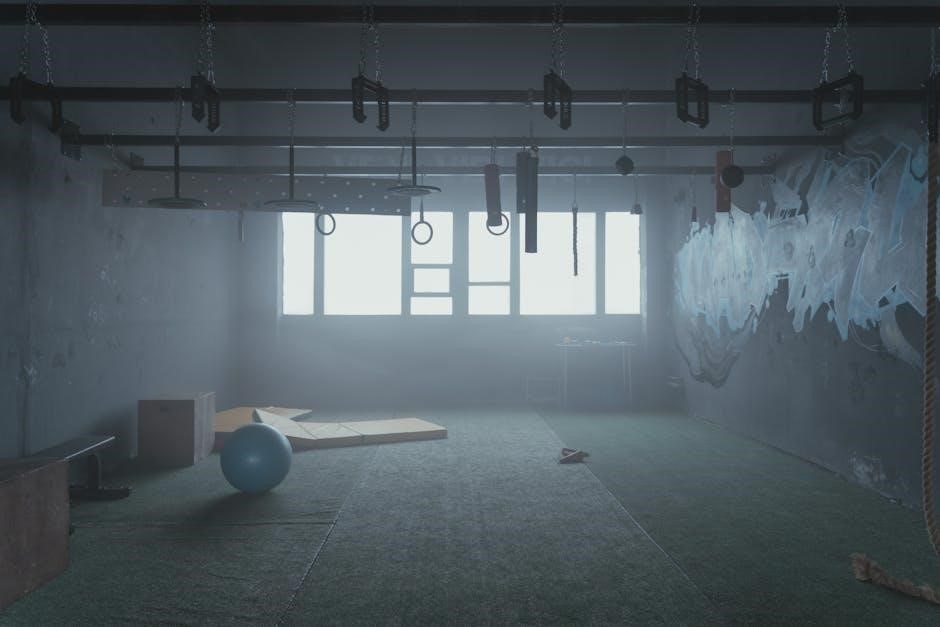
Calisthenics Exercises PDF: A Comprehensive Guide
Calisthenics, utilizing bodyweight, offers a fantastic path to fitness; downloadable PDFs provide structured routines, encompassing exercises like push-ups, squats, and planks.
These guides cater to all levels, from beginners seeking foundational strength to advanced athletes aiming for complex skills, ensuring progressive training.
What is Calisthenics?
Calisthenics is a form of exercise that utilizes your own bodyweight as resistance, focusing on rhythmic movements for strength, endurance, and body control. Unlike weightlifting, it doesn’t require specialized equipment, making it incredibly accessible and versatile – perfect for training anywhere.
The core principle revolves around functional training, building practical strength applicable to everyday life. Common exercises include push-ups, pull-ups, squats, dips, planks, and lunges, each scalable to different fitness levels.
Modern calisthenics, popularized by groups like Bartendaz and individuals like Frank Medrano, has evolved into a dynamic discipline encompassing impressive skills. It’s about mastering your body through consistent practice and progressive overload, building a strong foundation before attempting more challenging movements. PDF resources often detail this progression, guiding you safely and effectively.
The Benefits of Calisthenics Training
Calisthenics offers a wealth of benefits beyond just building strength. Because it relies on bodyweight, it enhances coordination, balance, and overall body awareness. The focus on functional movements translates to improved performance in daily activities and other sports.
Accessibility is a key advantage; no gym membership or expensive equipment is needed. You can train virtually anywhere, making it a convenient option for a consistent fitness routine. PDF guides often highlight how to modify exercises for different environments.
Furthermore, calisthenics promotes core strength and stability, crucial for injury prevention. Progressive overload, detailed in many training plans, ensures continuous improvement and prevents plateaus. It’s a holistic approach to fitness, fostering both physical and mental resilience.
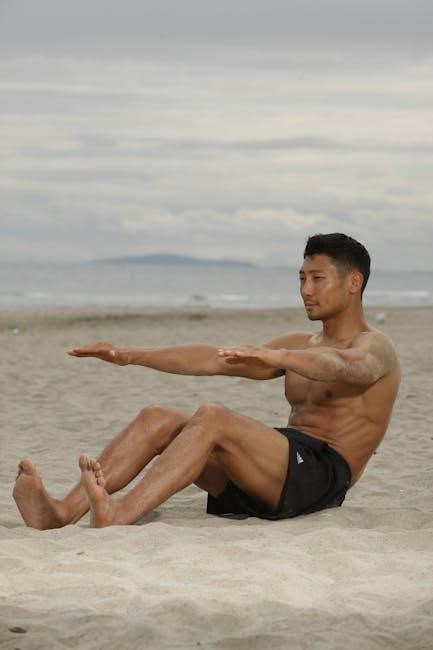
Essential Calisthenics Exercises for Beginners
Starting with foundational movements is crucial for a safe and effective calisthenics journey. Beginner-friendly PDF resources typically emphasize exercises like push-ups, starting with knee push-ups for modified difficulty. Squats are another cornerstone, building lower body strength and endurance. Mastering proper form is paramount, often detailed with visual aids in guides.
The plank is essential for core stability, improving posture and preventing injuries. Lunges enhance lower body power and balance, offering a versatile exercise. These exercises, when combined, create a full-body workout accessible to all fitness levels.
PDFs often provide progressions, showing how to gradually increase difficulty as strength improves, ensuring continuous challenge and growth.
Push-Ups: Variations and Progression
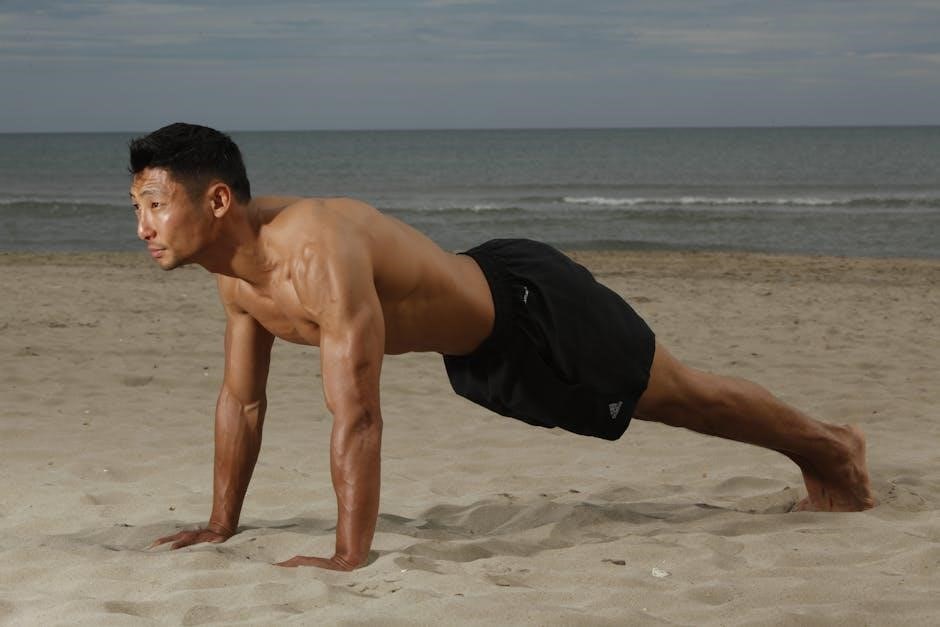
Push-ups are a cornerstone of calisthenics, and PDF guides detail numerous variations for all levels. Beginners often start with knee push-ups, reducing the load and focusing on form. Incline push-ups, using an elevated surface, offer another easier modification. As strength increases, progress to standard push-ups, then decline push-ups, elevating the feet for added challenge.
PDF resources illustrate proper technique, emphasizing a straight back and controlled movements. Further progressions include diamond push-ups, targeting the triceps, and wide-grip push-ups, emphasizing the chest.
Detailed PDFs often include rep and set recommendations, alongside progression schemes to continually challenge your muscles and build strength over time.
Squats: Mastering the Foundation
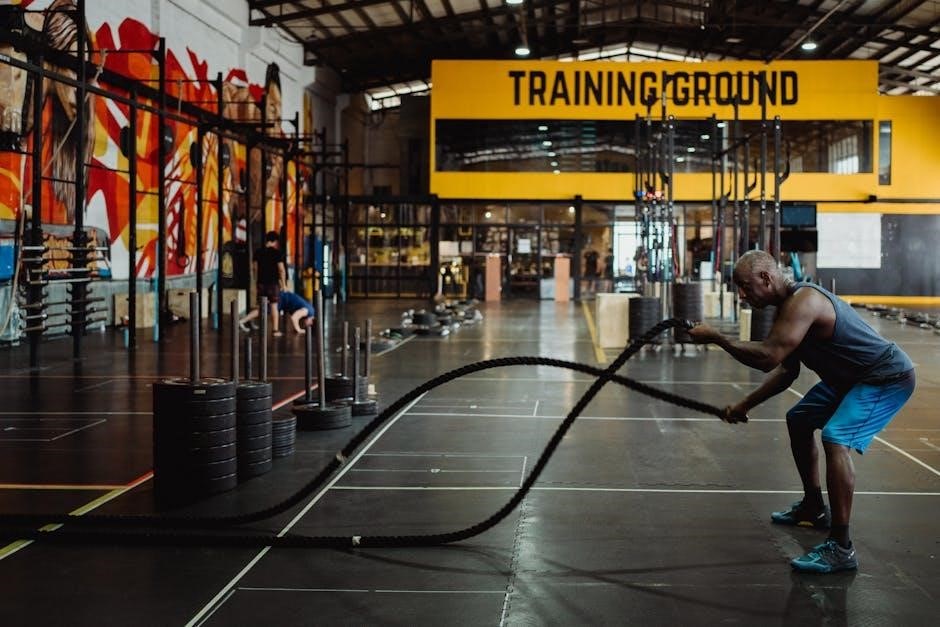
Squats form a fundamental base for calisthenics, and comprehensive PDF guides break down proper form and progression. Beginners often benefit from box squats, using a box to ensure correct depth and build confidence. Mastering the basic bodyweight squat is crucial, focusing on maintaining a straight back and controlled descent.
PDF resources illustrate key cues, like keeping the chest up and driving through the heels. Progressions include jump squats for explosive power, and pistol squats – a challenging single-leg variation.
Detailed guides often provide scaling options and rep/set schemes, allowing individuals to tailor the exercise to their current fitness level and progressively increase difficulty.
Plank: Core Strength and Stability
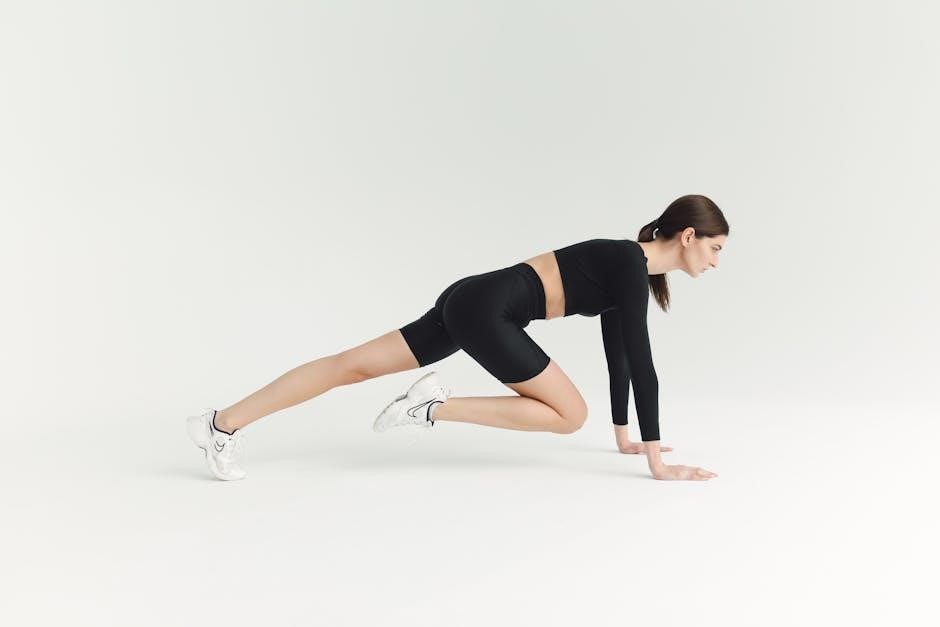
Planks are a cornerstone of calisthenics, building essential core strength and stability, and PDF guides detail proper technique for maximum effectiveness. These resources emphasize maintaining a straight line from head to heels, engaging the core, and avoiding sagging hips.
Beginner PDFs often suggest starting with shorter hold times, gradually increasing duration as strength improves. Variations like side planks target obliques, while plank with shoulder taps add a dynamic challenge.
Advanced guides may include weighted planks or plank jacks. Detailed illustrations and step-by-step instructions ensure correct form, minimizing risk of injury and maximizing core engagement.

Intermediate Calisthenics Exercises
Intermediate calisthenics, detailed in many PDF resources, build upon foundational movements, demanding greater strength and control. These guides introduce exercises like pull-ups, dips, and lunges, progressing beyond basic push-ups and squats.
PDFs often provide progressions for each exercise; for example, assisted pull-ups using resistance bands or a chair, and incline dips to build tricep strength. Proper form is heavily emphasized, with visual aids demonstrating correct technique.
These resources also highlight the importance of balanced training, incorporating exercises that target all major muscle groups. Intermediate PDFs often include workout routines combining these exercises for a full-body challenge.
Pull-Ups: Building Upper Body Strength
Pull-ups, a cornerstone of intermediate calisthenics, are extensively covered in dedicated PDF guides. These resources detail proper form – a full range of motion, controlled ascent, and slow descent – crucial for maximizing effectiveness and preventing injury.
PDFs often address common challenges, like initiating the pull-up, offering progressions such as negative pull-ups (slowly lowering from the top position) and assisted pull-ups using resistance bands. Variations, like wide-grip and close-grip pull-ups, are also explained, targeting different muscle groups.
Many guides include workout routines incorporating pull-ups, alongside supplementary exercises to build supporting muscle groups, ensuring balanced upper body development. Detailed illustrations and video links are frequently included for clarity.
Dips: Targeting Triceps and Chest
Dips, a powerful calisthenics exercise, are thoroughly explained in numerous PDF resources. These guides emphasize the importance of controlled movements, maintaining an upright torso, and achieving a full range of motion to effectively target the triceps, chest, and shoulders.
PDFs often provide progressions for beginners, starting with bench dips – utilizing a stable surface for assistance – before progressing to parallel bar dips. Variations, such as weighted dips for increased challenge, are also detailed.
Troubleshooting common form errors, like flaring elbows or insufficient depth, is a key feature of these guides. Workout routines integrating dips are frequently included, alongside complementary exercises for balanced muscle development. Visual aids and video demonstrations enhance understanding.
Lunges: Lower Body Power and Balance
Lunges, a cornerstone of calisthenics lower body training, are comprehensively covered in dedicated PDF guides. These resources detail proper form – maintaining a 90-degree angle in both knees, keeping the front knee aligned with the ankle, and engaging the core for stability.
PDFs showcase various lunge variations, including forward lunges, reverse lunges, walking lunges, and lateral lunges, each targeting different muscle groups. Progressive overload is emphasized, suggesting the addition of weight (vests or dumbbells) as strength increases.
Common mistakes, such as knee cave-ins or leaning too far forward, are addressed with corrective cues. Sample workout routines incorporating lunges for enhanced lower body power and balance are frequently provided, alongside modifications for different fitness levels.
Advanced Calisthenics Skills
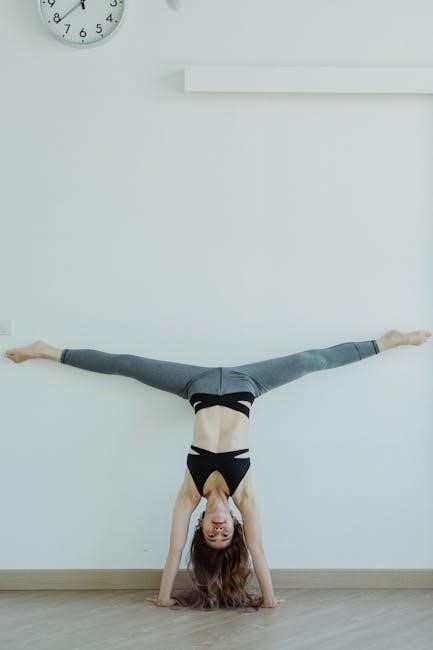
Calisthenics PDF resources dedicated to advanced skills detail progressions for movements requiring significant strength, control, and body awareness. These guides often feature comprehensive breakdowns of skills like handstands, muscle-ups, and front/back levers.
Handstand training PDFs emphasize wrist preparation, shoulder stability drills, and progressive holds against a wall, transitioning to freestanding practice. Muscle-up tutorials break down the technique into phases: pull-up, transition, and dip, with scaling options.
PDFs highlight prerequisite strength levels and mobility requirements for each skill, alongside common pitfalls to avoid. They frequently include detailed imagery or video links demonstrating proper form and offer training plans for skill acquisition.
Handstands: Developing Balance and Control
Calisthenics PDFs focusing on handstands prioritize building foundational strength and wrist stability. These resources detail preparatory exercises like wrist stretches, pike holds, and wall walks, crucial for injury prevention and proper form.
Progressive drills are outlined, starting with wall-supported handstands, gradually decreasing reliance on the wall as balance improves. PDFs emphasize engaging the core and maintaining a hollow body position for stability.
Detailed guides often include troubleshooting tips for common challenges, such as arching the back or losing shoulder alignment. They may also incorporate balance drills, like shifting weight and controlled falls, to enhance control.
Visual aids and video links are frequently included to demonstrate correct technique and provide clear instruction.
Muscle-Ups: A Challenging Full-Body Movement
Calisthenics PDFs dedicated to muscle-ups break down this complex skill into manageable progressions. They typically begin with building sufficient pulling strength through strict pull-ups and explosive jump pull-ups.
Transition work is heavily emphasized, focusing on drills like false grip training and negative muscle-ups to develop the necessary technique. PDFs often detail specific hand positioning and body angles for optimal performance.
Assistance exercises, such as band-assisted muscle-ups, are included to help beginners overcome the initial strength barrier. Detailed guides provide cues for each phase – the pull, the transition, and the lockout – ensuring proper form.
Troubleshooting common errors and injury prevention strategies are also frequently addressed within these resources.
Creating a Calisthenics Workout Routine
Calisthenics workout routine PDFs emphasize balanced training, incorporating pushing, pulling, and leg exercises for comprehensive development. They often suggest structuring workouts around movement patterns rather than isolated muscle groups.
Many PDFs offer pre-designed routines categorized by skill level – beginner, intermediate, and advanced – providing a clear pathway for progression. These routines typically include sets, reps, and rest times for each exercise.
PDF guides highlight the importance of warming up before each session and cooling down afterward, including dynamic stretches and static holds. They also advocate for incorporating deload weeks to prevent overtraining and promote recovery.
Customization is encouraged, allowing individuals to tailor routines to their specific goals and available equipment.
Progressive Overload in Calisthenics
Calisthenics PDFs consistently stress progressive overload as crucial for continued gains. Since you’re using bodyweight, increasing resistance isn’t as simple as adding weight plates; instead, PDFs detail modifications to exercises.
These modifications include progressing to harder variations – for example, from knee push-ups to standard push-ups, then to decline push-ups. Increasing repetitions and sets is another common method outlined in these resources.
PDF guides also suggest reducing rest times between sets to increase intensity and improving exercise form to maximize muscle activation. Focusing on controlled movements and full range of motion are emphasized.
Ultimately, PDFs demonstrate that consistently challenging your muscles is key to unlocking strength and skill.
Calisthenics Training Plans (PDF Resources)
Numerous downloadable PDF resources offer structured calisthenics training plans, catering to diverse fitness levels. Many beginner PDFs start with foundational exercises like push-ups, squats, and planks, gradually increasing difficulty over four weeks, as some plans suggest.
Intermediate PDFs introduce pull-ups, dips, and lunges, focusing on building upper and lower body strength. Advanced plans often incorporate skills like handstands and muscle-ups, demanding significant strength and control.
These PDFs typically outline weekly schedules, specifying exercises, sets, repetitions, and rest periods. They often include progression charts to track improvements and ensure continuous challenge.
Finding a plan aligned with your current ability and goals is vital for success.
Calisthenics Communities and Influencers
The calisthenics world thrives on a vibrant community and inspiring influencers who share knowledge and motivation. Groups like Bartendaz, Baristi, Barstarzz, and Bar-Barians have pioneered modern calisthenics, showcasing impressive skills and promoting bodyweight training globally.
Individual figures such as Hannibal for King and Frank Medrano have gained immense popularity, inspiring countless individuals with their dedication and incredible strength. They frequently share workout routines and tutorials online, often available as downloadable PDFs or through their platforms.
Online forums and social media groups provide spaces for enthusiasts to connect, share progress, and seek advice. These communities are invaluable resources for learning new exercises and staying motivated.
Following these influencers can provide access to valuable training insights.
Bartendaz & Baristi: Pioneers of Modern Calisthenics
Bartendaz and Baristi are globally recognized groups credited with popularizing modern calisthenics, elevating it beyond simple exercises to a dynamic discipline. They’ve significantly impacted the accessibility of calisthenics training, often sharing routines and progressions through online platforms, including downloadable PDF guides.
Their focus on fluid movements, strength skills, and creative expression has inspired a generation of calisthenics athletes. They demonstrate complex exercises, breaking them down into achievable steps, making advanced skills more approachable.

Many resources, including training plans and exercise tutorials, are available online, sometimes compiled into comprehensive PDF documents. These resources often detail progressions for skills like handstands and muscle-ups.
Their influence continues to shape the calisthenics landscape.
Frank Medrano & Hannibal for King: Individual Inspiration
Frank Medrano and Hannibal for King stand as prominent individual figures within the calisthenics community, inspiring countless individuals with their incredible strength and dedication. Both have cultivated massive followings through social media, showcasing impressive bodyweight feats and offering training insights.
They frequently share workout routines and exercise progressions, often available as downloadable PDF guides or through online platforms. Their approaches emphasize functional strength, body control, and mindful movement.
Hannibal for King, known for his raw and intense training style, and Frank Medrano, celebrated for his fluid and dynamic movements, both demonstrate the potential of calisthenics.
Their influence extends to the creation of training programs and resources.
Safety Considerations for Calisthenics
Prioritizing safety is crucial when undertaking calisthenics training, regardless of skill level. Many downloadable PDF guides emphasize proper form and progressive overload to minimize injury risk. Always begin with a thorough warm-up, preparing muscles and joints for exertion.
Listen to your body; pain is a signal to stop and assess. Proper technique is paramount – consider seeking guidance from a qualified instructor, especially when learning advanced skills.
Ensure a stable training environment, free from obstacles. Gradual progression is key; avoid attempting exercises beyond your current capabilities.
Cool-down stretches aid recovery and flexibility. PDF resources often include safety checklists and modification options.
Leave a Reply